
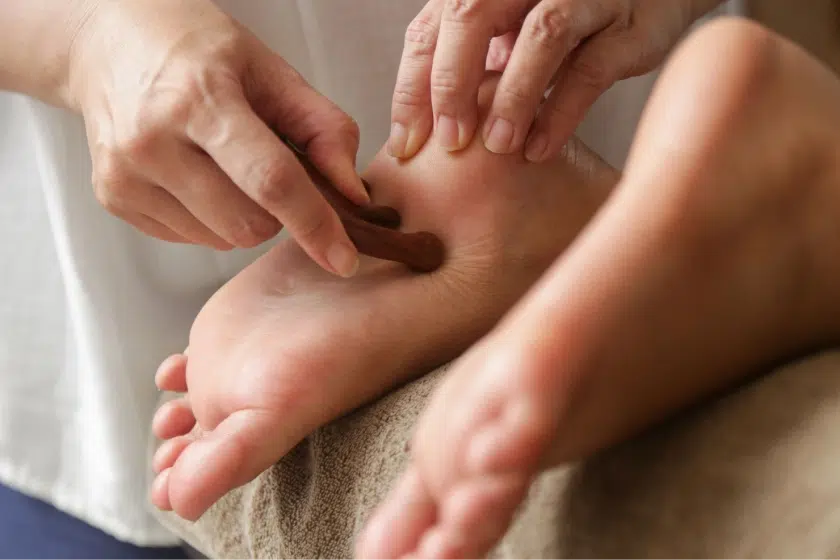
What is Reflexology?
Reflexology is a gentle massage therapy where pressure is applied to certain points on the feet, hands, or face. These points are thought to connect to different parts of the body. The goal is to relax the body, improve circulation, and support healing.
It’s been used for centuries in different cultures and is now becoming more popular in cancer care for managing symptoms like pain, fatigue, and stress.
What is Peripheral Neuropathy?
Peripheral neuropathy happens when nerves in the hands and feet are damaged – often as a side effect of chemotherapy. It can cause:
- Tingling or “pins and needles”.
- Numbness or pain.
- Muscle weakness.
- Balance problems.
This condition is common in people going through or recovering from cancer treatment and can affect daily life.
How Can Reflexology Help?
Reflexology doesn’t cure nerve damage, but it may help relieve symptoms and improve comfort. Many people say it helps them:
- Feel less pain or tingling in their hands and feet.
- Sleep better.
- Relax and feel less anxious or stressed.
Some studies show reflexology might help with cancer-related symptoms, but more research is needed. Still, many cancer support centres offer it as part of holistic care.
Is It Safe During Cancer Treatment?
Yes – when done by a trained professional who understands cancer care. Reflexology is non-invasive, doesn’t use needles or drugs, and can be a soothing part of your treatment plan.
Always speak with your doctor before starting any new therapy, especially if you’re in active treatment.
Other Helpful Therapies for Nerve Pain
Reflexology works best as part of a full support plan. Other helpful options include:
- Exercise: Helps with strength and balance.
- Occupational therapy: Makes daily tasks easier and safer.
- Relaxation techniques: Like mindfulness or meditation.
- Medication: Sometimes used to ease nerve pain.
Final Thoughts
Reflexology is a gentle, natural therapy that may help ease nerve pain and improve wellbeing during or after cancer treatment. It won’t replace medical care but can be a helpful addition.
If you’re interested, talk to your care team and find a reflexologist trained to work with cancer patients.