This blog outlines the role of exercise in supporting individuals with lung cancer, including its effects on physical function, treatment tolerance, and quality of life. It also provides guidance on safe participation in exercise during and after treatment. The Role...
Exercise Helps Protect Your Heart Breast cancer treatments (like chemotherapy and targeted drugs) can damage the heart. But research shows that regular exercise can lower this risk. Women who stay active during and after treatment have fewer heart problems than those...
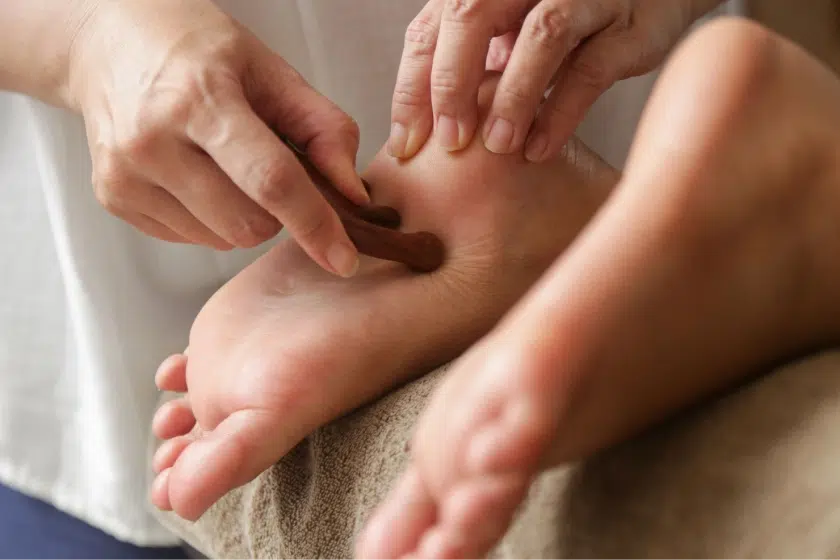
What is Reflexology? Reflexology is a gentle massage therapy where pressure is applied to certain points on the feet, hands, or face. These points are thought to connect to different parts of the body. The goal is to relax the body, improve circulation, and support...
Exercise and Prostate Cancer: Why It Matters Prostate cancer is the most commonly diagnosed cancer in Australian men, with 1 in 6 affected by the age of 85. While treatments such as surgery, radiation, and Androgen Deprivation Therapy (ADT) are effective in...
What if a daily walk could help prevent your colon cancer from coming back? It might sound too good to be true – but a major international study called the CHALLENGE Trial just proved that regular exercise can actually improve survival in people who’ve had colon...
Sarcoma is a rare and complex form of cancer that affects bones and soft tissues. Treatment often includes surgery, chemotherapy, and radiation – each of which can take a physical and emotional toll. While rest and recovery are a part of healing, research is...